The MacNeil/Lehrer Report; "The Impact Of Massive Layoffs In Steeltown, U.S.A"
- Transcript
LEN BALLOCK, 21 Years of Service: I had twenty-one years down there. In the last couple of years I kept on thinking: nine more years, I`ll be set; I`ll retire, my house is paid for and everything else, my kids will be at the right age and everything else -- and now what have I got?
JOHN BRACAGLIA, 34 Years of Service: I see right now there`s families having troubles. Men are drinking, where they usually don`t drink; good workers, good men.
ED BUTCH, 12 Years of Service: The unknown future -- not knowing when you`re going to get a job, where you`re going to get a job, is the hardest thing to take.
ROBERT MacNEIL: The words of unemployed steelworkers in the Youngstown, Ohio area. Tonight, the impact of massive layoffs in Steeltown, U.S.A.
Good evening. Three eastern Congressmen today asked the House of Representatives to help save communities from the economic and social disaster of factory closings. Their bill would encourage workers and community groups to use government loans to take over and run industries closed as unprofitable by distant corporations. In introducing the measure, Democrat Peter Kostmayer of Pennsylvania said it was intended to rescue communities like Youngstown, Ohio -- one of the ailing centers of the U.S. steel industry. Last September 5,000 workers lost their jobs when Youngstown Sheet and Tube, pleading falling profits and foreign competition, closed down. Another 6,100 steelmen may be thrown out of work if U.S. Steel follows suit, as it may, and if two other plants merge.
We`ve been wondering for some time what happens to a community like Youngstown, which lives on steel, when its industrial heartbeat stops. What does it do to the men, and their families, and the small businesses, and the churches? Tonight, sad days in Steeltown. Jim?
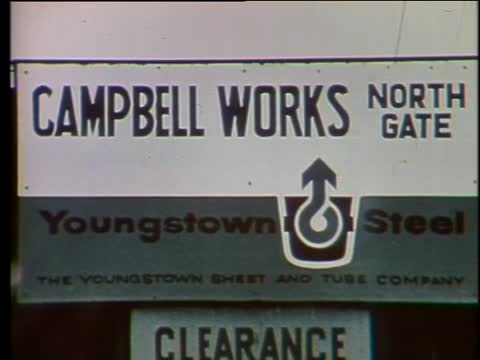
JIM LEHRER: The talk in steeltowns like Campbell and Struthers, Ohio has always revolved around the mill. The massive Campbell Works of Youngstown Sheet and Tube Company dominate the landscape and the conversation in these parts. But with the mill mostly shut down, unemployment benefits have replaced shop talk as the topic of conversation at the union hall. There`s a whole new vocabulary with strange terms like SUBs and TRAs. SUBS is short for Supplemental Unemployment Benefits. These are paid by the company over and above unemployment insurance. The SUB funds were set up for short, temporary plant closings, and with thousands laid off since September, the SUB funds are running out. Since January 1, only workers with twenty years or more service are still drawing on these benefits.
TRAs stand for Trade Readjustment Allowances. Essentially they are weekly benefits paid by the federal government to any person who has lost his job due to foreign imports. TRA payments run from one year up to seventy-eight weeks and equal seventy percent of a worker`s wages when added to unemployment insurance.
These total benefits equal a financial cushion that is easing the adjustment for thousands of steelworker families. That cushion also makes the impact of layoffs more difficult to assess. But as producer Ken Witty and reporter Lew Silverman found out during several snowy days in the Youngstown, Ohio area, it`s not immediate financial want that`s worrying people. What`s at stake here is a way of life, a man`s own sense of self- worth.
BALLOCK: We don`t want the damn welfare that we`re getting. I get a lot of money right now, from the state, from the Supplemental Unemployment Benefits, and I get it from the TRA. I get a bundle of money. But I don`t want this damn money. I want that place to re-open; I want to make steel.
When I see 400 men of my department -- I`m the elected representative of that -- when I see them walk out with no jobs after anywhere from two to twenty to thirty years` service down there, giving their lives -- and these men are experts; we are experts in steel -- and when you say, Do you think this is going to happen, it`s not a question of whether it`s going to happen, it has to happen. The government has to pump money into there, we have to re-open that plant right down there, or you`re talking about 15,000 jobs. Listen, you take ten to fifteen thousand jobs out of this valley, you`re going to have a ghost town in Struthers and Campbell, and Youngstown`s going to be hurting. And the people around here right now are fed up with the government. They`re fed up with Carter and the whole damn bunch. You can give several hundred million dollars foreign aid to a small country, you can spend billions of dollars sending men to the moon and everything else; damn it, it`s about time that you concentrated down here, because if it doesn`t stop here -- it has to stop right here, in Mahoning County. It has to stop here, because if it doesn`t stop here it`s going to spread all over the place. We were screwed, royal. My own particular case, with twenty-one years, forty-eight years old. I have to look out, I have two small kids. I have to look out for myself. If nothing happens, say, around August, then I`m going to head West and I`m going to try and find a job out West. Because I have to look out for my family. If nothing happens around here, say by that time if there isn`t anything concrete, I`d say by August or September, well, then we have no hope.
LEHRER: Among the unemployed the impact isn`t shared equally. Veteran workers are eligible for early retirement. The younger men have no such assurances. Talk among them is about leaving, but there are mixed feelings.
ANDY LONGO, 112 Years of Service: I myself have had job offers, mostly all out-of-state work. But since I have a new home under construction I haven`t been able to leave to even look into them. But some of them have left me an open offer to come whenever I get straightened out. It`s quite a move, just the idea of picking up and moving out altogether, you know, family and everything, selling; it`s a bigger step, I think, than a lot of people realize.
Most people really don`t want to leave, you know, especially if you`ve been here all your life. About the last thing you want to do is pick up and leave, even if you do get a better job offer somewhere else, you know. You go somewhere, especially if it`s a long ways off, like these offers I`ve had, they`re a thousand, 1,300 miles away. Yeah, I`ve got offers, but you go there, you don`t know anybody at all. You`ve got to start all over again. I think that really is the hardest part, is picking up and leaving.
JIM STEVENS: My name is James Stevens. I`m twenty eight years old. I just turned twenty-eight. I was hired by Sheet and Tube on my eighteenth birthday, and expected to retire on my forty-eighth. Unfortunately, I don`t think that`s going to be. I not only want to stay in this area, I`m almost forced to have to stay in this area.
KENNETH WITTY, Producer: Why is that?
STEVENS: Well, if there`s no one to purchase my home, I have to stay here. One of my plans is to go into business with a friend of mine and maybe build a few homes. My only worry is, is there going to be anyone here to buy those homes?
LEHRER: Jim Stevens and Andy Longo are skilled workers. Andy is a welder; Jim is a carpenter. Other men without special trades are even less certain about the future.
WITTY: Has this been a sort of crisis for you?
JOE CARCHEDI, 9 Years of Service: I`ll say it has. You don`t know which way to turn. I`ve been laid off before and been able to accept it. But when they tell you you`re on unemployment and then they tell you your job`s gone, it`s a little different story. If they tell you you`ve lost your job and you cry about it, well, I`m not going to cry about it, it`s just a fact of life.
EDDIE TUCKER, 10 Years of Service: The way I feel, I mean, you know, it was a hard blow to everybody. People got families, homes to pay for, stuff like that. It`s just a big hurt.
WITTY: What are your plans?
TUCKER: My plans? Well, I don`t have any plans as of the moment, right now. Just wait and see what happens before I make a move.
LEHRER: Electrician Ed Butch, at thirty years old, was a twelve-year veteran at the Campbell Works. But Ed is another one of the luckier men; his experience makes him readily employable -- if he relocates. But Ed has a special problem.
BUTCH: The house I have right now is the house that me and my wife talked about when we were going together, before we got married; and it takes a lot of work, a lot of money to establish yourself and get what you`ve always wanted. The house that I have right now is our dream house. We don`t want to give it up, but as young as I am, it may be a necessity, because of the fact that there aren`t any jobs around here, to move. Like I said, I was interviewed in Tennessee; if I have to, I`ll move to Tennessee. And I`ll never have my dream house again. We felt, for Christmas this year, in `77, that we would go all out. We spent more on our children this year than we`ve ever spent because we don`t know what next year will bring.
WITTY: Have you noticed any psychological effects on you, your family, your friends?
BUTCH: Yes, the tensions between me and my wife -I`ve been married for, it`ll be eleven years in June and we`ve never had any problems, thank goodness -- but the tensions right now are ... we`re at each other`s throats more often. Me being home, the time, I suppose, that I`m spending with her and the kids, it`s hard on both of us because the pressures that are there, the unknown future, is the most drastic part. It`s terrible. And up at the union hall here I`ve talked to several of the people that I worked with and a couple of them have mentioned problems -- wives leaving them, and so forth -- that it`s tragic, and I know if no other sales are up in this area, alcohol sales will be up -- I really think so -- using that as a crutch. I`m not yet, thanks, but it`s a traumatic shock.
BRACAGLIA: A man`s worried about the family, but the pressure right now on a lot of young guys the wives are putting, they`re worried, what`s going to happen in the next six months, seven months? And meanwhile, it`s eating him, but he can`t do nothing about it. It`s going to turn out either he`ll get ulcers, going to get sick, who knows? Desperate enough to steal.
LEHRER: As one of the senior men at the mill, John Bracaglia is not affected. He will retire with a pension. But as a second-generation steelworker with a steelworker son also laid off, he`s worried about the future.
BRACAGLIA: President Carter better do something. All the people we have in Campbell, I would say ninety percent of them work in the steel mills -- not Youngstown Sheet and Tube, but Republic Steel and all. With out the steel mills, there is nothing. What is going to happen? People are saying there`s a lot of work down in Texas, there`s a lot of work in Colorado, there`s a lot of work in Louisiana. What if everybody in Campbell does that, takes off and leaves? Then what`s going to happen? What`s going to happen to my home town, the town I love?
MacNEIL: John Bracaglia`s home town, Campbell, and its bigger neighbor, Youngstown, are located in the northeastern part of Ohio. There, the Mahoning Valley stretches for thirty miles near the Pennsylvania border, midway between Pittsburgh and Cleveland. One of the area`s most serious problems is its landlocked location: sixty-five miles from Lake Erie, thirty-five miles from the Ohio River. Without easy access to waterways, steelmakers suffer sharply higher transportation costs. Railroads in the region are in disrepair, and trucking is very expensive when it comes to shipping steel. A canal to the Great Lakes was planned in the 1930s, but never built.
Ironically, steelmaking grew up in the Mahoning Valley because this area offered some special advantages. In the last century, the region was rich in those resources needed for making iron and steel: surface iron ore, high grade coal, and limestone. America`s first blast furnace was built here in 1803. By the turn of the century, Youngstown and the Mahoning Valley were second only to Pittsburgh as the nation`s iron and steel producing center.
Today, most of the half million people who live in the Mahoning Valley owe their livelihoods directly or indirectly to steel. There`s not only Youngstown Sheet and Tube, there`s U.S. Steel, there`s Jones and
Laughlin, and there`s Republic; and there are all little iron and steel works, the fabricators, the scrap steel dealers, and all the other peripheral enterprises that exist because of the big steel mills.
Because the Mahoning Valley lives or dies by steel, the massive layoffs have this region reeling. In workingmen`s taverns with names like the Open Hearth and the Steelton Cafe, the big question is, which mill will be next to go down? Already U.S. Steel has indicated that it will soon close down its seventy-five-year-old Ohio Works. Jim?
LEHRER: Nobody knows the local history of Campbell, Ohio better than Sam Myers. Sam has worked at the Campbell works for forty-four years and is an official of Steelworkers` Local 1418. He`s been a life long resident of Campbell, seen its good days and its bad ones, like during the Great Depression. We asked him to give us a tour of the area, along with some general impressions.
SAM MYERS: Campbell throughout its history has a remarkable background. There was a time in the past when we were referred to as the Ruhr Valley of the United States.
We were essential in producing military arsenal for the Armed Forces in World War I, World War II, the Korean conflict, the Vietnam War. I think we were quite vital to the national defense of the country. We not only contributed quite a bit of steel-making know-how, but we also contributed a large portion of the youth in the defense of this country in World War II, and also the other conflicts that followed.
And going back to my youth, there are some things that I remember quite vividly. The older first generation would often look over the top of the hill to see whether there was smoke coming out of the stacks; to him that meant prosperity, employment, it meant food on the table.
Campbell probably represented practically every ethnic group that you could think of. The church has always been an important factor in this town for all of the ethnic groups. We have the Slovak Catholic Church-- that`s St. John`s -- Greek Catholic Church, you`ve got the Russian Orthodox, and then of course you`ve got the other churches that have since then moved in and taken their place with them. I think that everybody really is proud of their church background in this community.
MacNEIL: The Youngstown region became a great steel center in part because of its skilled and stable work force. Generations of Central Europeans, Italians and Irish built their lives around the mills of the Mahoning Valley. Like most everyone of his generation, Big Dan Basara has spent his whole working life at the Sheet and Tube. The day we ran into him at the Union Hall, he was talking about the old days with some friends.
DAN BASARA: Years ago, during the Depression and the Roaring Twenties, the Youngstown Sheet and Tube was something like a college, a steel college, where the people went from here into U.S. Steel and became presidents. This is where all the steel people come from. This is their livelihood, they know this is their livelihood, this is their bread and butter; they raise their families, pay their homes off, and they know that this is their life. And now it`s just like somebody that cuts your legs from underneath you. Down you go.
FIRST STEELWORKER: When we were born, our fathers went down to Youngstown Sheet and Tube, they put in our application. When we reached the age of seventeen or sixteen, we were down there.
BASARA: It was like a family affair -- the father, the son, the brother, grandsons, they were all down there.
SECOND STEELWORKER: The only thing we knew was to come right down to the iron house.
MacNEIL: When Julius Petko was laid off this fall, a family tradition ended. At one time he, his father, and seven brothers worked for Youngstown Sheet and Tube.
JULIUS PETKO: It used to be, years ago, when your dad was hired in the mill, and if I applied for a job, why, they`d look at my dad`s record and see what type of employee he was. If he was a good worker and never missed work, why, they figured I was a good risk. Because I happened to be working near my dad or something, and if I did get in trouble, they`d go to my dad and say, Hey, straighten your son out.
WITTY: Did you enjoy your work?
BRACAGLIA: Did I enjoy my work. Are you married? My first marriage is Youngstown Sheet and Tube. I been down there when I was sixteen years old. You ask me, do I enjoy my work. I enjoyed my work so much that I used to stay an hour, an hour and a half without getting paid. That`s how I enjoyed my work.
LEHRER: To find out how the layoffs are affecting the families of steelworkers, we visited the Marr family -- Jim Marr, his wife Roseann, and their five children. Jim Marr was born in Struthers where he and his family now live. Jim comes from a steel family. His father worked for Sharon Steel; four of his brothers are steelworkers and also a brother-in-law. Before being laid off in the fall, Jim had worked for Youngstown Sheet and Tube for twenty-eight years. We asked him about his family`s reactions to the big layoffs.
JIM MARR: In fact, I was on vacation when I got the word that they were shutting down the hot strip, blooming mill, cold strip. At that time I was bring ing my dog up to the dog pound there, and my wife and them were all crying; she says that, how was the dog when you brought him up to the dog pound? I said, well, I got a little better news for you. I says, think this one out, I don`t have a job.
ROSEANN MARR: And I said, I don`t care about your job, all I`m worried about is the dog. (Laughing.)
Mr. MARK: It didn`t hit her.
LEHRER: With his many years of seniority, Jim could go back to work in another part of the mill. But because of union rules, he would actually lose money by returning. He is also awaiting the outcome of arbitration of Rule 65, a new steelworker pension plan under which he might be eligible for early retirement. While such matters are being resolved, Jim remains home on a sort of extended vacation.
Mrs. MARK: I really enjoy having him home because maybe I`m being a little selfish -- the painting`s getting done, the drippy faucets are getting the washers put on. But I don`t know how I`ll feel maybe by this summer. It doesn`t bother me, though, him being around the house. I know, if he`s home for a long period of time, though, that it will affect him.
Mr. MARR: It bothers me to stay home completely all day. I enjoy my eight hours of going to work, and come home and then go through my daily routines, because it seems to make the day go by faster, you know. But when you`re just home mostly all day, you don`t find too much to do. I`d sooner work. If I`d had to retire or something like that, I don`t think I would enjoy it.
LEHRER: Financially, the Marrs say they are better off than a lot of their neighbors and friends. Although they have they expenses of sending son Jimmy away to college to study engineering, Roseann works part time in a decorating business and is also part owner of a bar. At least until Jim`s benefits run out, the Marrs can meet their obligations. But the pressures are clearly taking their toll on Jim Marr; he says he`s developed a neurological problem that`s causing his hair to fall out. And when asked if he thinks he and his family will have to leave their lovely home, he says it`s not so much if, but when.
MacNEIL: With so many people like the Marrs thinking about moving and others already gone, the economic prospects of steeltowns like Campbell are not good. We talked to a number of Campbell businessmen to see what the impact has been so far. Our first stop was City Hall, and Mayor Rocco Mico, who just took office the first of the year. We asked the new mayor how the closing of the mill will affect tax collections.
Mayor ROCCO MICO: Just to give you a ballpark figure, we`re going to lose approximately $1,240,000. And that`s quite a bit of money. This is the only thing we have in Campbell, Youngstown Sheet and Tube. And when they pay sixty-five or seventy percent of your taxes, you know why our tax base is so low.
WITTY: What do you think is going to happen to this town?
MICO: Well, let me put it this way: we`re not going to die, because we have good people here in the city of Campbell -- very good people. And I think we`re just going to have to buckle down, the whole community`s going to have to buckle down and just go out here and do things to show other communities that Campbell`s not dead. We`re not going to be a dying community.
MacNEIL: Mayor Mico is hopeful, but some danger signs are already apparent. At the Dollar Savings and Trust Company in Campbell, district manager Nick Opencar reports that loan volume is down this winter. Other wise, business in the bank is pretty normal.
At a Spanish-American grocery that caters to Campbell`s Puerto Rican community, owner Merchadi Alghamee is gloomy. He says he`s going back to his native Yemen, after running the store for twenty-four years. His business is falling off, he says, and he`s been robbed four times in the past year. He says he`s afraid for his safety.
At Christy`s Bakery, owner Christy says his weekend business is holding up but his weekdays are off. Steelmen used to come in and buy donuts by the dozen to take into the mill. His donut business is way down since the big layoffs, says Christy.
Tom Peters owns a small general merchandise store directly across from Youngstown Sheet and Tube. He says it`s already too late to sell out, so he just keeps going day by day.
TOM PETERS: The way the business is now, even though it`s dropped off, if it would maintain this pace, we`re okay here, we can still make a decent living. At any other rate -- if it would slow down -- then we`re in trouble.
MacNEIL: More trouble may lie ahead. A merger plan, already announced, between Lykes, the parent corporation of Youngstown Sheet and Tube, and LTV, parent of nearby Jones and Laughlin Steel, could put 1,100 more men out of work. Those figures are recently quoted by Youngstown Mayor Philip Richley. Jim?
LEHRER: One unusual aspect of the Youngstown situation has been the active role of the churches. Several weeks after the Lykes Corporation announced they were closing the mill, religious leaders of the Mahoning Valley formed an Ecumenical Coalition. Part of their plan was to see if worker-community ownership of the Campbell Works would make economic sense. Father Edward Stanton has been one of the organizers of the Ecumental Coalition and is now its staff director. We asked him how the coalition came up with the idea of worker-community ownership of a steel mill.
Father EDWARD STANTON: We looked around and didn`t see anybody getting off the plane out at the airport with duffel bags full of thousand dollar bills. So we said, Okay, community-worker ownership is maybe the only way we can go. There`s two basic reasons that clergy and the churches are as involved as they are in this thing: number one is, pastorally we heard 5,000 of our people out there saying, We`re hurting. And number two, nobody else was doing a thing.
As far as the impact on the individual people, I don`t think we`ve seen the full impact yet. People are somewhat hopeful that somebody -- the religious coalition or somebody else -- will turn the situation around. I think that people are not showing the concern, but I think deep down it`s there. Eastern Mental Health, which is the group that takes care of the mental health needs of half of this county, has received a $155,000 grant from Columbus, from the State mental health bureau, a special grant for the next eighteen months, to deal with the special problems of that are going to be coming up. One of the main concerns the first day that we met as clergymen to look at the moral and ethical problems was also a social service concern that we had, because we felt there was going to be an increase in the use of alcohol, increase in the use of drugs, increase in domestic difficulties, child abuse, all of these things which could possibly happen. We don`t see any great signs of them happening yet, but deep down we feel if the situation is not reversed -- because I know the people of this valley very well; I was born here myself, I grew up here, I worked in the mills summers when going to college in the seminary, and I had a parish on the east side of Youngstown, Sacred Heart, which overlooked the mills. You`d get up in the mornings and walked over to mass, and you saw the mills. And most of the parishioners there were mill workers -- not only at Sheet and Tube, but the other mills in the area. And they`re a proud people. That role reversal, where Mother is now the breadwinner in the family, is something they can`t handle. And rightfully so, they`re proud people. Now, if there`s a dirty word in this valley, it`s welfare. They don`t want welfare, they want work. They want jobs.
MacNEIL: Many of those voices reflected the uncertainty in the valley five months after disaster struck -- whether to live on hope, or to give up and move away. What hope there is springs from a rising spirit of self-help in the Mahoning Valley. Local politicians, those church leaders, and citizens` groups are energetically canvassing ways to save themselves. A takeover of Youngstown Sheet and Tube by the community and its workers, along the lines of the Kostmayer bill presented to Congress today, is the most vigorously pursued. That coalition of church groups has started a Save Our Valley fund, with a goal of up to twelve million dollars. They wish to demonstrate to Washington that there is local financial support for the takeover. And there`s talk of rationalizing the diverse steel production, to make the area a model for the modern steel age in this country. But for now, the psychic wounds in Youngstown are fresh and unhealed.
Jim Lehrer and I will be back tomorrow night. I`m Robert MacNeil. Good night.
- Series
- The MacNeil/Lehrer Report
- Producing Organization
- NewsHour Productions
- Contributing Organization
- National Records and Archives Administration (Washington, District of Columbia)
- AAPB ID
- cpb-aacip/507-2v2c825052
If you have more information about this item than what is given here, or if you have concerns about this record, we want to know! Contact us, indicating the AAPB ID (cpb-aacip/507-2v2c825052).
- Description
- Episode Description
- The main topic of this episode is The Impact Of Massive Layoffs In Steeltown, U.S.A. The guests are Lewis Silverman. Byline: Robert MacNeil, Jim Lehrer
- Broadcast Date
- 1978-03-01
- Rights
- Copyright NewsHour Productions, LLC. Licensed under a Creative Commons Attribution-NonCommercial-NoDerivatives 4.0 International Public License (https://creativecommons.org/licenses/by-nc-nd/4.0/legalcode)
- Media type
- Moving Image
- Duration
- 00:31:28
- Credits
-
-
Producing Organization:
NewsHour Productions
- AAPB Contributor Holdings
-
National Records and Archives Administration
Identifier: 96584 (NARA catalog identifier)
Format: 2 inch videotape
If you have a copy of this asset and would like us to add it to our catalog, please contact us.
- Citations
- Chicago: “The MacNeil/Lehrer Report; "The Impact Of Massive Layoffs In Steeltown, U.S.A",” 1978-03-01, National Records and Archives Administration, American Archive of Public Broadcasting (GBH and the Library of Congress), Boston, MA and Washington, DC, accessed September 18, 2026, http://americanarchive.org/catalog/cpb-aacip-507-2v2c825052.
- MLA: “The MacNeil/Lehrer Report; "The Impact Of Massive Layoffs In Steeltown, U.S.A".” 1978-03-01. National Records and Archives Administration, American Archive of Public Broadcasting (GBH and the Library of Congress), Boston, MA and Washington, DC. Web. September 18, 2026. <http://americanarchive.org/catalog/cpb-aacip-507-2v2c825052>.
- APA: The MacNeil/Lehrer Report; "The Impact Of Massive Layoffs In Steeltown, U.S.A". Boston, MA: National Records and Archives Administration, American Archive of Public Broadcasting (GBH and the Library of Congress), Boston, MA and Washington, DC. Retrieved from http://americanarchive.org/catalog/cpb-aacip-507-2v2c825052