Game Designers Reflect on the New Medium (1983)

Transcript
Hide -
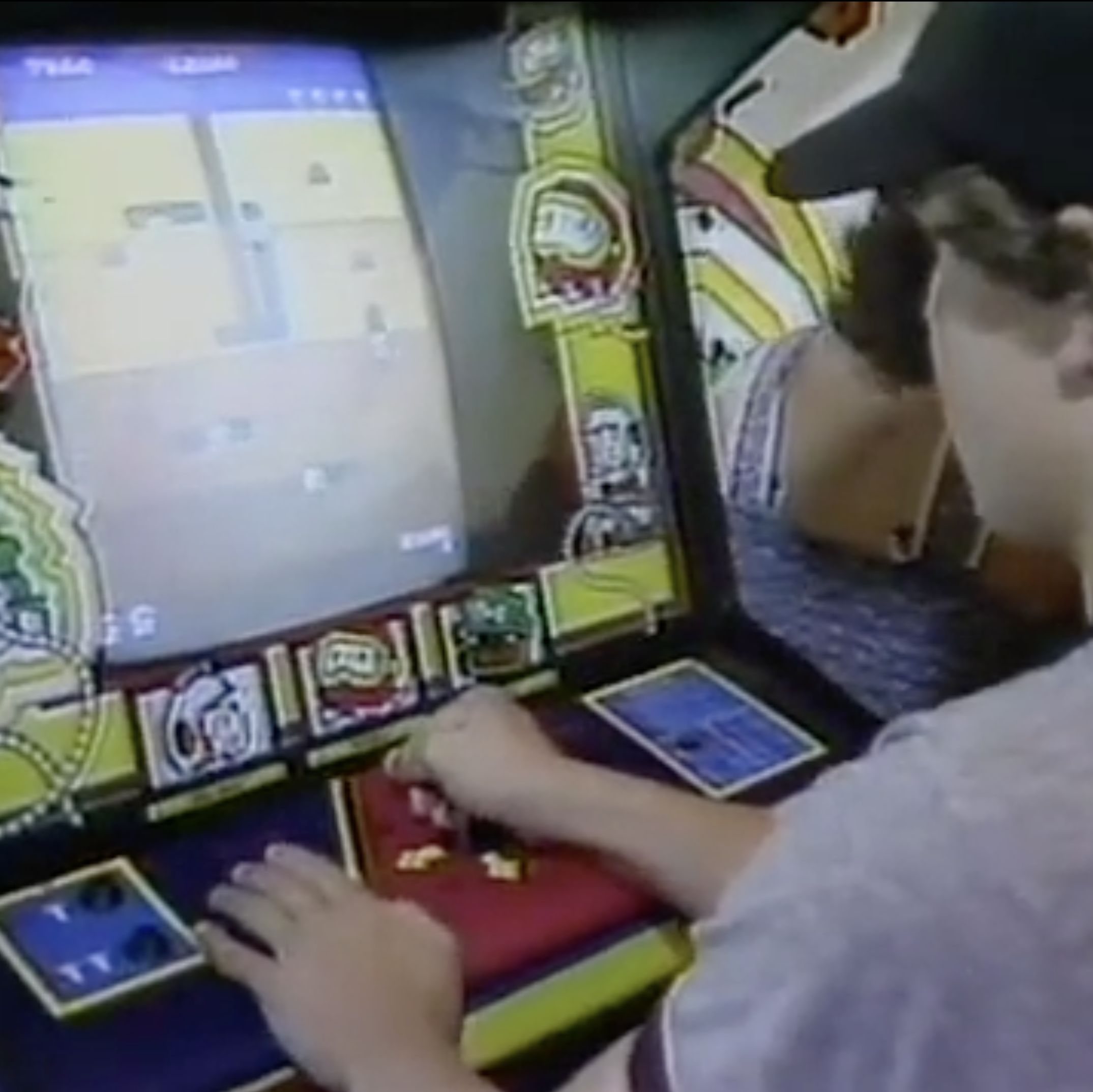
your hardware may be capable of producing graphics it will draw a single line. But you can be exceedingly mature after only changing in your genes and even responding to your moods can be even more exciting. That's one of the reasons arcade games take in more than 8 billion dollars in quarters a year when you own your own computer and game software you can save the quarters whether you like to destroy the. Anime lasers or solve the mystery of the Lost Continent there is a game for you and with us today. Our Chris Crawford and Bill but just to gain wizards who will share with us their views on the art of computer game design. Chris is best known for eastern front and Bill wrote one of the first video pinball games and maybe they'll give you some hints to help you win your next battle with the computer monster. Welcome Chris. Chris what do you have on your mind when you start to build a game program.
I want to try to get into the player's mind. That game is is an expression of fantasy and I want to create a real fantasy that that player can really experience and participate in the game. So I'm I'm using the game as a vehicle for expression. Bill what makes you start writing again. There are a couple different things have different modes of creation. One is if you just get an idea you decide you want to implement it will make a good game. Another might be you have a lot of pieces lying around you've been working on for a while your workshop is cluttered as it were and you have a great idea for putting together something really great comes out of it. Chris are people playing you or are they playing the computer when they play your games. Well they're playing a little robot of me and they're playing a little little toy version of me. I can't put all of myself into the computer the computer isn't that smart yet and I'm not that good a programmer anyway. But I can put a little bitty version of myself into the into the computer and that's what they're playing
against. Are you ever surprised by the way the games respond after you've written constantly. First of all when they don't work and someone calls you up and there is no such thing. It's all the time because what you're really doing when you're writing a complicated video game is creating a small world. And if it's an interesting at all it's much too complicated to predict. And so of course there are going to be times when it just totally does something different. Can you say with any certainty right now what kind of game is successful and what kind of game it is and I don't think anyone can people have tried to engineer it try to make a formula out of it and they have groups that get together and say Are we going to do this this and this will have a successful game but it never really works that way is some kind of serendipity or something that's discovered right in the middle of the project especially if it's a kind of an artistic undertaking. There's always some unexpected thing that happens that really turns it one way or the other. Ellen is dicta right a successful group. Well to write it the entire process can take up to a year.
If you're fast maybe you can shorten that to nine months. The design process is that it is the questionable one that can take up to six months of programming once you've got the idea in your head then you write the program. That might take only three months. What's the difference between design and program program. Give me an analogy here. The. It's sort of like the difference between what went into making the movie Jaws for example and what goes into making all of the copies of Jaws. The initial inspiration in the development making it an exciting interesting fantasy. That's hard. That's that's design. That's creativity. The technical aspects of writing the program that is still tedious work but nowhere near so. So demanding in talent bill is it a committee decision to write these gains or are you in for all season.
You know that all I've had to be a Man for All Seasons just because it's hard to put together groups. But it's really turning into a group thing I think. First of all someone you need a creative guy and graphics designers are getting into video games now to a lot of the bigger companies have somebody whose only job is to design monsters on the TV screen. And as computers get bigger and bigger and hard to understand for one single person it's going to become more of a it's going to like a rock group and you'll have a guy who's really good on graphics guys get on synthesizers and at the moment do you do all of that now on your own. I do it all myself and I'm a terrible egotist and I don't let anyone else do anything that I'll be forced to change. Chris why do you write games. Is it a job to you. Or are you up to Choose the world. Definitely have to change where they the game is a medium of expression. It's something I do because I have something to say about the way I see the world. It's an artistic vehicle so I try to put into my games
something that's important to me. Like what. Well I did one game about about I did two games about energy. One was about the energy crisis and one was about nuclear power plants because these are important and difficult problems and people tend to oversimplify and I wanted games that would show that. You think it's important to do something like that than to shoot down airplanes or. Well it's OK to shoot down airplanes but it's also good to have games that have a message and I wanted to I did a game about war. I feel we we've got it War is a pretty important topic and most people misunderstand it. So I did a game trying to make some points about what really goes on in war. Bill do you feel responsible for the complaints that we hear from a lot of

Game Designers Reflect on the New Medium (1983)

The technological advances in video games also engendered advances in how games were imagined, written, and designed. This clip from a 1983 episode of KQED San Francisco’s program, Bits, Bytes, and Buzzwords, features an interview with two innovators in game design conversing about the ways creating interactive video games is akin to creating a small world for people to explore. The idea of video game development as “world building” is more commonplace today, but this interview offers an important precedent to that way of engaging with the medium.

Bits, Bytes and Buzzwords: Graphs, Games and Grades | KQED-TV: San Francisco, C.A. | February 14, 1983 This video clip and associated transcript appear from 04:10 - 09:55 in the full record.

View Full Record