Political Backlash Against Crime in Newark (1979)
Newark, New Jersey, provided an archetype of urban decay in this era. According to a 1976 report by the New Jersey Economic Council, the state lost 110,000 manufacturing jobs—almost one-quarter of its manufacturing workforce—between 1953 and 1975. Many of those workers were from the former industrial center of Newark. By 1980, unemployment in the fading industrial center rose above 13% and the poverty rate rose above 30. As joblessness rose in Newark, so did crime. In 1980, Newark police recorded over 11,000 violent crimes, resulting in a per capita rate that was more than five times the national average estimated by the FBI.
This 1979 New Jersey Nightly News report is evidence of how some politicians used the crime issue to mobilize supporters—often along racial lines. The city’s racial composition had changed as dramatically as its economic base: in 1950, Newark was 83% white and 17% Black; by 1980, just 31% of residents were white and 58% were Black. In this clip, two white politicians in Newark—Anthony Imperiale and Anthony Carrino—both claim to speak for the “decent people” of Newark who are tired of being victimized by a criminal class. Notably, their criticisms are largely aimed at the administration of Kenneth Gibson, Newark’s first Black mayor, arguing that the local government needs to do more to stop crime.
New Jersey Nightly News | New Jersey Network | August 16, 1979 This video clip and associated transcript appear from 9:51 - 12:01 in the full record.
View Full Record Middle Class Exodus to the Suburbs (1966)
 The Struggles of the Auto Industry (1980)
 The Domino Effect of Plant Closures in the Rust Belt (1978)
 Joblessness and Lack of Opportunity for Black Urban Youth (1983)
 Urban Decay in the South Bronx (1980)
 Crisis in Urban Housing Projects (1978)
 Fear of Crime in American Cities (1979)
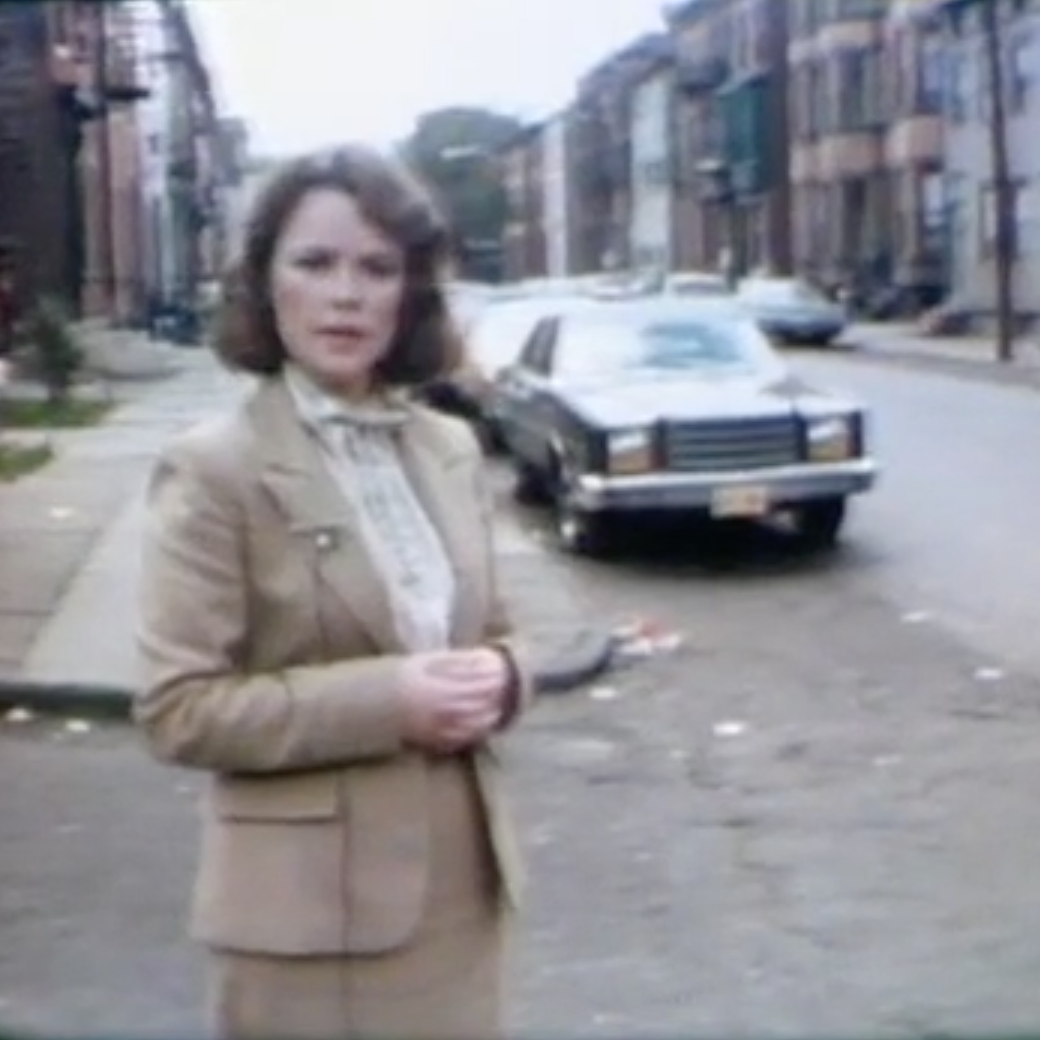 Stopping the “Vicious Cycle” of Suburban Flight (1978)
 The “Local Control” Argument Against Aid to Cities (1977)
 Debating Aid to Struggling Cities (1978)
 The Political Challenge of Reviving New Jersey’s Cities (1982)